Tender Age Doctrine Explained: When Does it Apply?
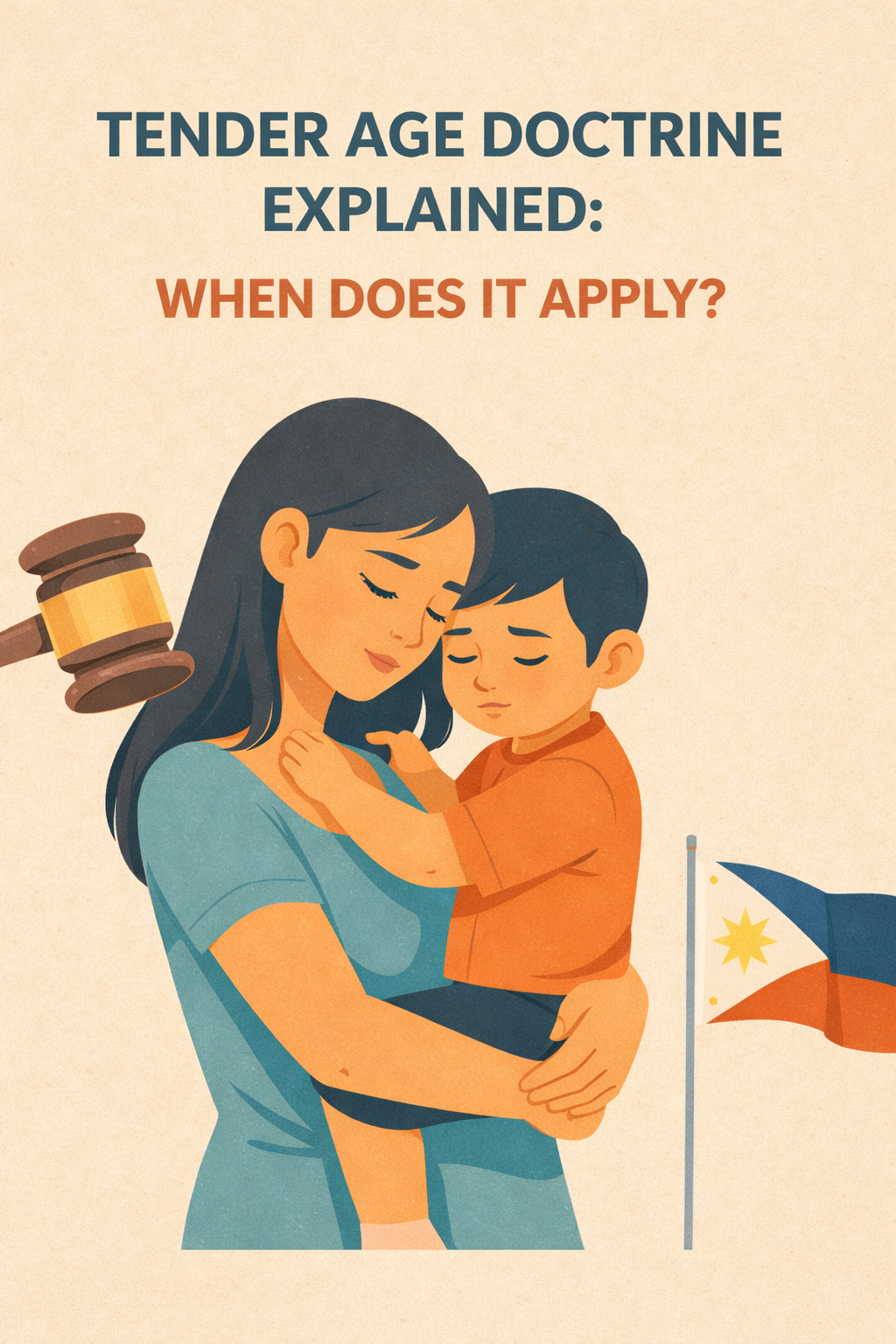
One of the most common questions in child custody disputes is: Who gets custody of a young child? Under Philippine law, this is often answered through the Tender Age Doctrine, a long-standing legal principle designed to protect the best interests of young children.
This article explains what the Tender Age Doctrine is, when it applies, and when courts may depart from it, based on the Family Code and Supreme Court rulings.
What Is the Tender Age Doctrine?
The Tender Age Doctrine provides that “no child under seven (7) years of age shall be separated from the mother unless the court finds compelling reasons to order otherwise.” (Masbate, et al. v. Relucio; G.R. No. 235498, July 30, 2018)
The doctrine is based on the presumption that mothers are generally better equipped to care for children of tender years, particularly with respect to emotional and physical nurturing.
When Does the Tender Age Doctrine Apply?
The doctrine applies when all of the following are present:
The child is below seven (7) years old;
There is a custody dispute between parents or guardians; and
There is no compelling reason to deprive the mother of custody.
Custody is not automatically awarded to the mother by mere operation of law, but the burden of proof lies heavily on the party seeking to remove the child from her care.
What Are “Compelling Reasons” to Deny Custody to the Mother?
Courts may deny custody to the mother if there is clear and convincing evidence of:
Neglect or abandonment
Abuse or maltreatment
Immorality or unfitness that directly affects the child
Drug addiction or mental incapacity
Exposure of the child to danger or harm
Mere allegations or moral judgments are insufficient. The court must find that the mother’s custody would be detrimental to the child’s welfare.
Best Interests of the Child Prevail
Even with the Tender Age Doctrine, the best interests of the child remain the controlling consideration. As the child grows older, courts place greater weight on stability, schooling, emotional bonds, and the child’s own preference.
Practical Takeaway
The Tender Age Doctrine strongly favors maternal custody for children under seven, but it is not absolute. Courts will always prioritize the child’s safety, welfare, and overall well-being over rigid legal presumptions.
* This blog post is for informational and academic purposes only and does not constitute legal advice. Readers are encouraged to consult a qualified lawyer for advice specific to their individual circumstances.
Need legal help understanding child custody rights under the Tender Age Doctrine?
Contact us and set an appointment today. Our team is ready to guide you through every step with clarity, compassion, and legal precision.